
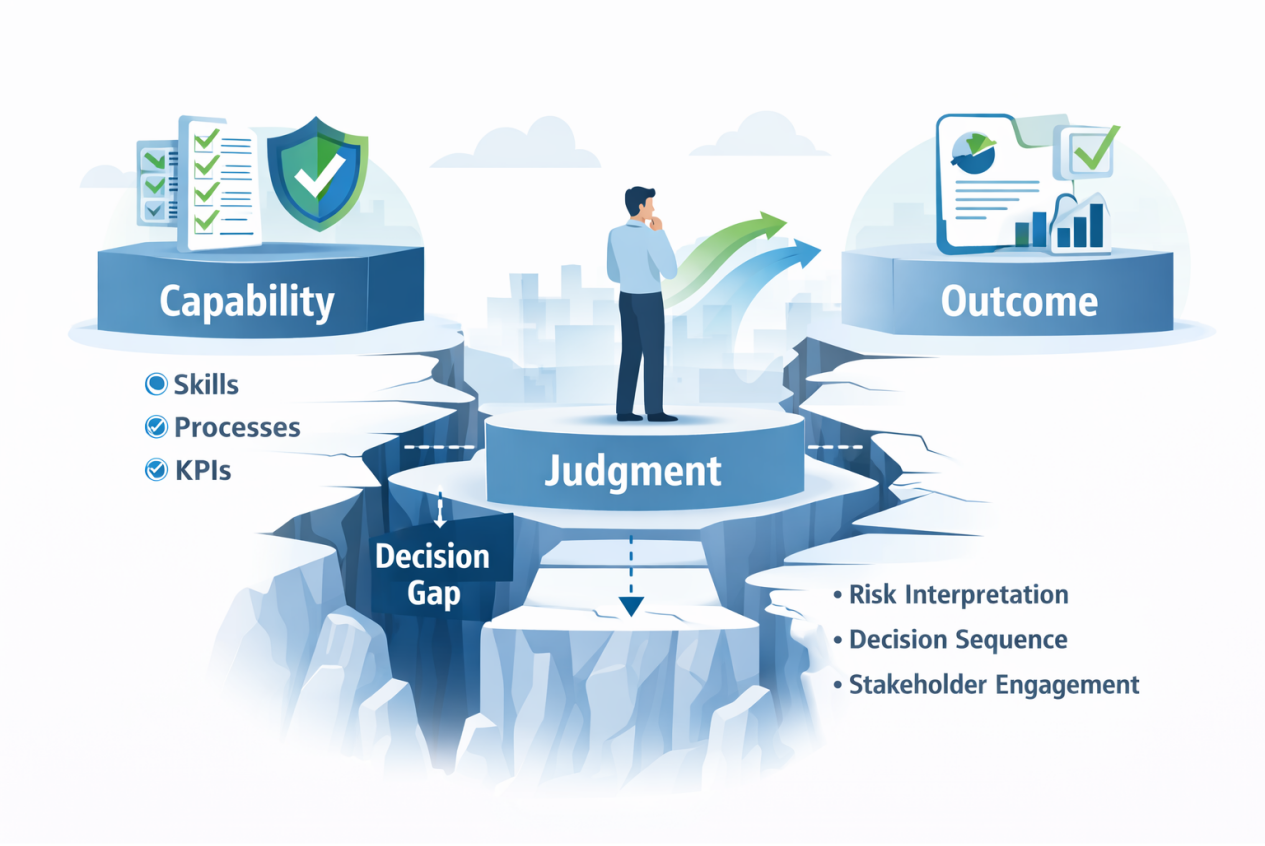
Procurement performance is often explained through skills, competencies, processes, and KPIs. Yet in practice, these factors rarely tell the full story.
Two procurement professionals may share the same role, training, tools, and performance targets - and still approach the same situation in fundamentally different ways. They may prioritize different risks, sequence decisions differently, or engage stakeholders with distinct instincts.
These differences are not random. But they are also frequently misunderstood. To understand the value of Procurement DNA, it is equally important to clarify what it truly represents - and what it does not.
Procurement DNA Is About How Decisions Begin
Procurement DNA refers to the underlying decision-making patterns that shape how procurement professionals think, prioritize, and act under real business pressure. It focuses on how decisions begin, rather than how they are later justified.
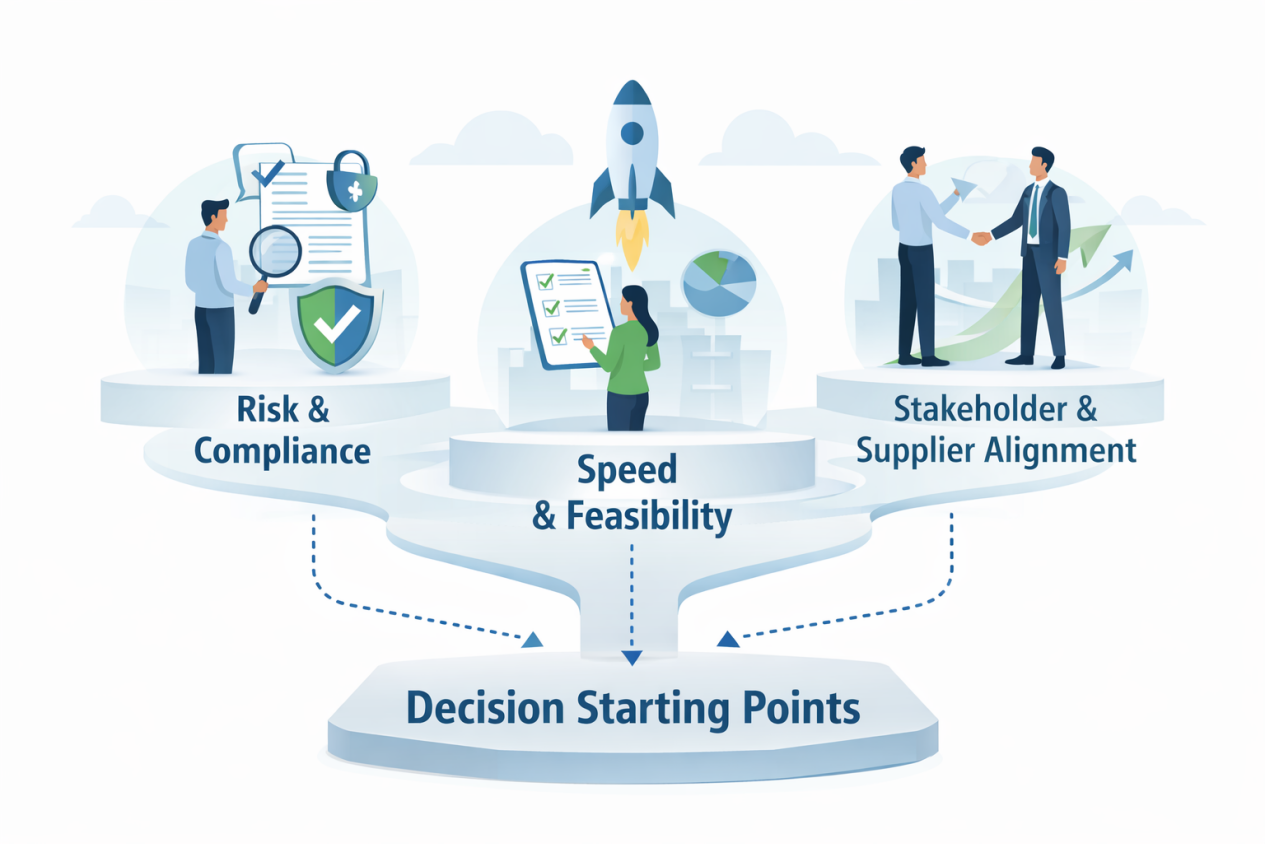
Before analysis starts, before options are compared, and before trade-offs are documented, professionals often have a natural starting point:
- Some instinctively scan for risk and compliance exposure
- Others immediately evaluate speed, feasibility, or execution impact
- Some focus first on stakeholder alignment or supplier relationships
These initial orientations influence how information is interpreted and which trade-offs feel acceptable. Procurement DNA captures these patterns - not as fixed rules, but as consistent tendencies that influence real-world outcomes.
This perspective builds on our introduction to Procurement DNA, where we outline why traditional procurement frameworks often fail to explain real-world decision differences.
What Procurement DNA Is Not
As the concept gains attention, it is often confused with familiar assessment frameworks. Clarifying these boundaries is essential.
Procurement DNA Is Not a Personality Test
Unlike generic personality assessments, Procurement DNA does not aim to describe who someone is across all aspects of life. Instead, it is context-specific.
It focuses exclusively on how professionals respond to procurement-related scenarios, such as:
- Cost versus risk trade-offs
- Short-term execution versus long-term value creation
- Supplier strategy decisions
- Cross-functional collaboration challenges
The goal is not self-expression or identity labeling, but understanding professional judgment patterns in procurement contexts.
Procurement DNA Is Not a Measure of Competence
Procurement DNA does not rank professionals as stronger or weaker. It does not measure intelligence, experience, or technical capability.
Highly capable professionals can exhibit very different Procurement DNA patterns - and achieve success through different decision paths.
Understanding Procurement DNA does not answer the question: “How good is this person?”
It answers a different question: “How does this person tend to approach decisions when trade-offs are unavoidable?”
Procurement DNA Is Not a Predictive Scoring System
Procurement DNA does not claim to predict outcomes in a deterministic way. Decision-making is influenced by many factors, including context, incentives, organizational culture, and constraints.
Instead, Procurement DNA highlights decision tendencies, which interact with context to shape outcomes.
The same pattern that enables strong performance in one environment may create friction or risk in another. Understanding this dynamic is more valuable than relying on fixed scores or rankings.
Why Skills, Processes, and KPIs Are Not Enough
Traditional procurement assessments tend to focus on what can be measured:
- Functional skills and certifications
- Process adherence and maturity
- Performance indicators and cost savings
These elements are essential - but they operate on the assumption that decisions are applied uniformly.
In reality, two professionals with identical skills and KPIs may:
- Interpret risk very differently
- Sequence decisions in opposite ways
- Engage suppliers and stakeholders with contrasting instincts
These differences emerge between capability and outcome - in the space where judgment operates. Procurement DNA exists in this space.
It explains why standardized processes sometimes produce inconsistent results, and why “best practices” can succeed in one team while failing in another.
Understanding Differences Without Labeling
A key principle behind Procurement DNA is neutrality. Different decision patterns are not treated as strengths or weaknesses in isolation. Their effectiveness depends on context:
- Stability versus volatility
- Mature spend versus emerging categories
- Centralized control versus distributed decision-making
Procurement DNA provides a framework for understanding these differences without reducing professionals to static labels. It encourages awareness, not categorization.
Why This Perspective Matters Now
Procurement environments are becoming more complex, interconnected, and time-sensitive. As automation, analytics, and AI take on greater responsibility for execution, human judgment becomes more visible - and more consequential.
In this environment, understanding how decisions are made matters as much as what decisions are made. Procurement DNA shifts the conversation from outcomes alone to the patterns that shape them.
A Foundation for Deeper Exploration
Clarifying what Procurement DNA means - and what it does not - creates a foundation for deeper questions:
- Why do procurement professionals with the same skills perform differently?
- Why do procurement teams think differently - even with shared processes?
- How do decision styles influence team dynamics and decision conflict?
- What human factors shape procurement performance and risk under complexity?
These questions will be explored further throughout the ProcureDNA Knowledge Hub.
Understanding Procurement DNA is not about changing who you are. It is about becoming more aware of how you approach decisions - so that judgment, collaboration, and outcomes can improve over time.